Zip ties — also called cable ties — are small parts that make a big difference in product performance and supply reliability.
For importers, distributors, and OEM manufacturers, understanding what zip ties are made of helps you manage quality, cost, and compliance before you place your next container order.
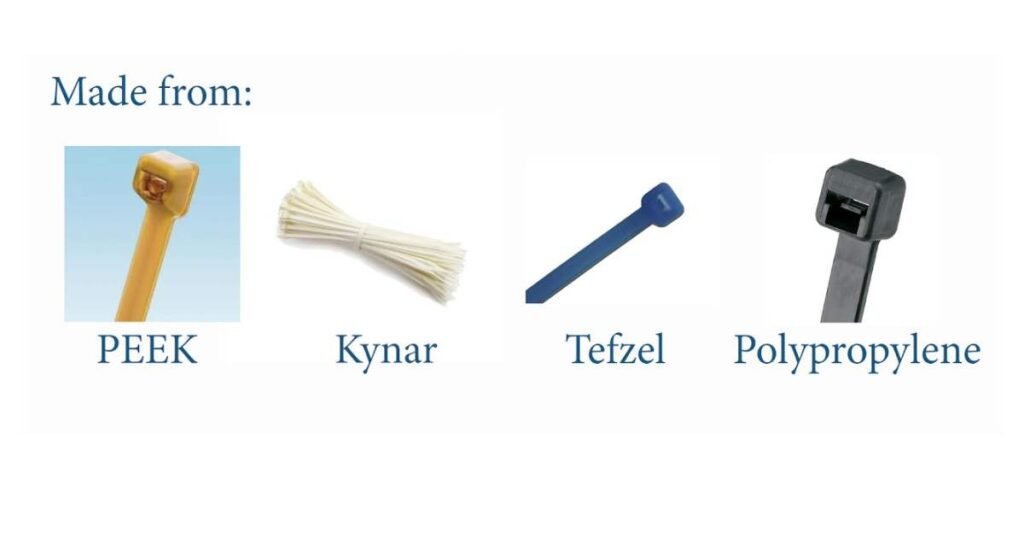
Main Materials Used in Zip Ties
Different materials define how a cable tie performs under heat, sunlight, or chemical exposure.
Here’s what you should know about the most common options in today’s trade market.
Nylon 6/6 — The Industry Standard
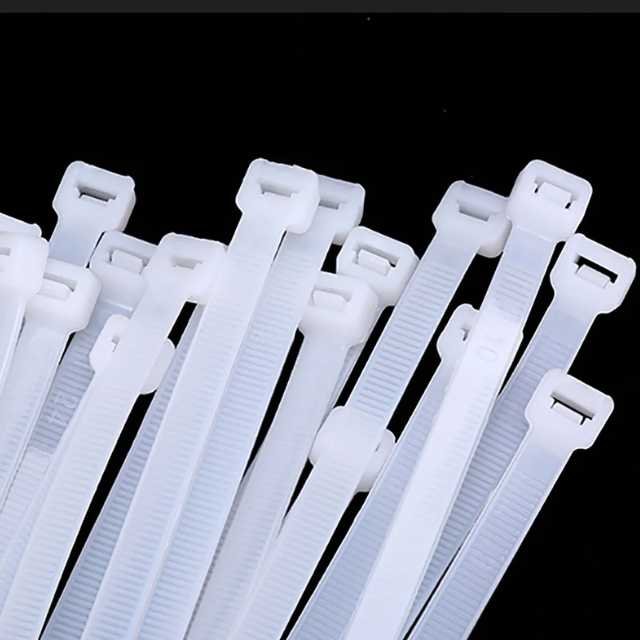
- The vast majority of zip ties are made from Nylon 6/6 (PA66). It offers high mechanical strength, wear resistance, and flexibility.
- Standard temperature range: –40 °C to +85 °C, with heat-stabilized grades reaching +125 °C.
- Moisture absorption helps maintain toughness but requires humidity-controlled packaging during shipping.
- For importers and distributors, Nylon 6/6 provides the best balance of cost, durability, and availability.
Stainless Steel — For Extreme Environments
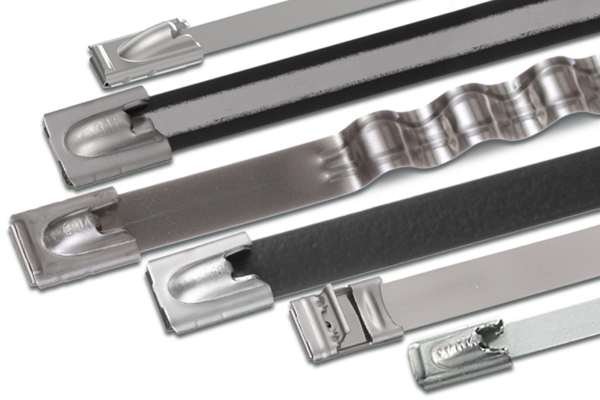
- Grades 304 and 316 stainless steel are used when ties face high heat, chemicals, or UV exposure.
- Operating range: from –80 °C to +540 °C; excellent resistance to salt spray and fire.
- Common in oil & gas, marine, and railway industries.
- For OEM brands, stainless steel ties create a premium product line with higher retail margins.
Alternative & Specialty Plastics
- Polypropylene (PP): lightweight and chemical-resistant; ideal for liquid or chemical plants.
- Tefzel® (ETFE) and ECTFE: used in radiation or aerospace environments where nylon would degrade.
- Metal-detectable nylon: contains trace metal additives so food-processing detectors can identify broken pieces.
These materials serve niche markets that distributors can use to differentiate their catalog.
Key Specifications & Trade-Relevant Parameters
Tensile Strength and Dimensions
- Pulling strength depends on width and material.
- 2.5 × 100 mm nylon tie → approx. 8 kg (18 lb) load
- 7.6 × 370 mm heavy-duty → up to 114 kg (250 lb) load
- Wider ties cost more per piece but reduce installation quantity.
- Importers should match size + tensile rating to their end-market requirements.
Temperature and UV Resistance
- Standard nylon ties work up to 85 °C; UV-stabilized grades resist sunlight for 5 + years outdoors.
- Black ties often contain carbon-black additive for UV protection.
- For coastal or desert markets, stainless-steel or UV-stabilized nylon is essential to prevent brittle failure and returns.
Compliance and Packaging
- Nylon 6/6 meets UL94 V-2 flammability and RoHS/REACH environmental standards.
- OEM customers may request UL file numbers and batch traceability for audit trails.
- Standard export packaging: 100 pcs per bag, 1 000 – 10 000 pcs per carton depending on size.
- Typical MOQ: 50 000–100 000 pcs per size, customizable per contract.
- Always request Material Safety Data Sheet (MSDS) and tensile-test report with each shipment.
What It Means for Importers, Distributors & OEM Brands
Importers
- Stock smart: choose Nylon 6/6 for general demand and UV-stabilized versions for outdoor markets.
- Verify certificates (UL, RoHS, CE) before customs clearance to avoid delays.
- Ask suppliers for humidity-controlled packaging to prevent brittleness during transit.
Distributors
- Use material differences to build tiered product lines: economy (nylon), professional (UV nylon), and industrial (stainless steel).
- Offer customers clear comparison charts — this reduces warranty claims and boosts trust.
- Manage reorder lead-time: stainless-steel ties often need 4 – 6 weeks longer production.
OEM Brand Manufacturers
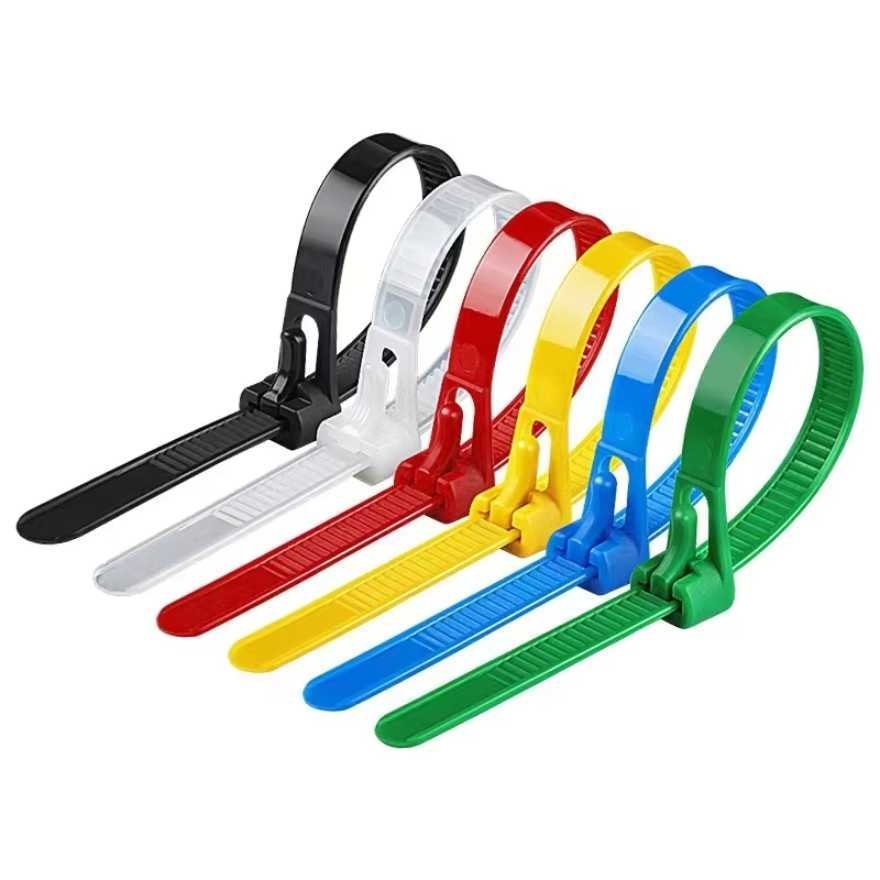
- Material choice defines brand positioning: premium lines can use colored UV-stabilized or metal-detectable nylon.
- Add value through custom printing, color-coding, or barcode molding.
- Work directly with factories that can supply consistent raw-material batches and low defect rates (< 0.3 %).
- Always align material spec with end-user certification needs (automotive, telecom, or food safety).
Case Study & Data Snapshot
A U.S. distributor supplying renewable-energy projects switched from regular nylon to UV-stabilized Nylon 6/6 for solar-panel installations.
Result: annual breakage rate dropped from 4.5 % to < 1 %, saving over USD 18 000 in replacement costs.
Another OEM brand adopted 316 stainless-steel ties for offshore cable management; though unit cost rose by 20 %, warranty claims fell by 70 %.
These numbers show how material selection directly impacts total cost of ownership, not just purchase price.
Summary
Zip ties may look simple, but material choice drives performance, compliance, and profitabil